

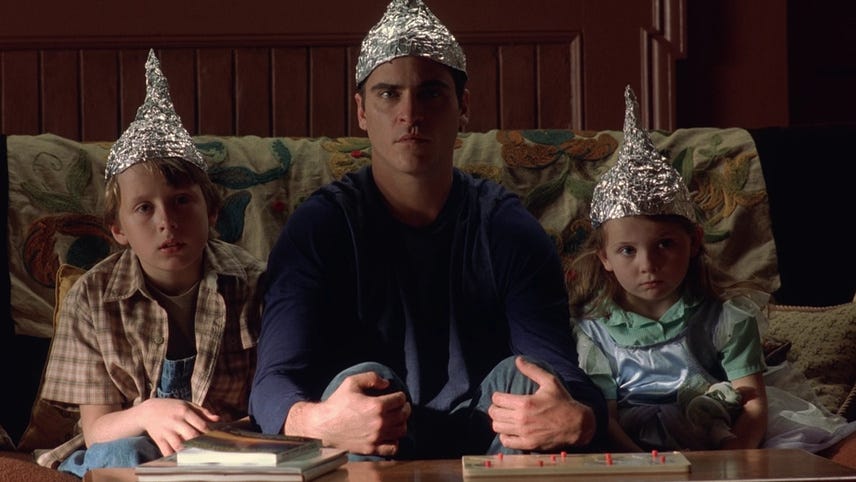
Half empty water glasses and a baseball bat on the wall.
The moment I realized there are no coincidences and my life started to make sense.

I remember turning 39 and having a serious set of a-ha moments. I have had a wild career, spending time working in politics, tech, startups and nonprofits, and have accumulated a lot of experiences being in interesting places at interesting times.
I’ve spent a lot of time asking myself, “why am I doing this?” Like, why am I making this jump, why am I sticking with this project, why am I working so hard for this thing. To outsiders, my career looks logical and exciting, but internally I have been just running on vibes and wondering what the fuck I’m doing.
But by my late 30s it all started to come together. And it wasn’t that it came together with wild successes, though I did have a bunch of those that validated my earlier instinctive moves. It came together like the thread of my life started to become visible.
I would encounter a new challenge or situation, and suddenly remember something I had learned 10 years earlier in an entirely different context that would help me through the moment. It just kept happening over and over again, this series of a-ha moments that made my life make sense.
I often said during that year that I felt like Mel Gibson’s character at the end of the movie Signs, suddenly understanding why there are half empty water glasses all over his house and a baseball bat on his wall. There are no coincidences.
You can tell yourself that as much as you want and you can tell yourself to trust your instincts and you can stay on the path that feels right despite logic telling you otherwise - but it’s hard. It wears on you after a while.
I spent a lot of my time in my 30s second guessing my choices. Wondering if I’d fucked up my life, if I should have made more conventional career moves that would have led to a more stable (boring but stable) life. So when the signs started showing up in my life and the puzzle revealed itself, it was more than a weight off my shoulders. It was like making it out to the other side.
It let me end my 30s with a confidence in myself that I hadn’t had at the beginning of that decade. It wasn’t that things turned out exactly as planned or that everything was going to be ok. It was validation that my gut knows what it is doing and I just need to listen to it.
Starting my 40s, I felt like I had figured things out. And then I got blindsided and let go from the organization I had spent most of the previous decade building from the ground up and my whole world went upside down again. But what was weird about the experience was what didn’t come with it.
I didn’t doubt myself.
I didn’t spend any time asking what I could have done differently, because I knew (for many reasons) that there wasn’t an answer to that question.
In an experience as dramatic as mine, it would be natural for your confidence to be shaken, but I was shocked by how little my confidence shook. I didn’t know what I was going to do next, but I knew in my bones I was going to be ok and that I could handle this.
If you’re spending a lot of time in your 30s wondering what the fuck you’re doing, know that what you’re really doing is learning what you’re capable of and watching yourself survive challenges you never knew you could handle. You won’t know exactly why for a while.
And then one day, it will all start to make sense. You got this.
Role Model of the Week
A weekly instalment where I highlight people I’m looking up to this week who are using the power they have to do cool, impactful, disruptive stuff to shift the status quo.
This week my two role models are Vass Bednar and Denise Hearn, two Canadian economists who just released a new book called “The Big Fix: How Companies Capture Markets and Harm Canadians”. These women are badass role models for many reasons, but the one that sticks out to me is that they are using their positions and roles to push important, disruptive conversations around power, money and institutions and questioning much of the conventional wisdom around how economies work.
Here’s an excerpt from the book that was recently printed in the Globe and Mail:
Moments of authenticity like this, which break the fourth wall, are so rare in championship wrestling that there is a special term for it: breaking “kayfabe.” Kayfabe is the illusion of rivalry. It is what all of pro wrestling is built on: invented characters and storylines, fake rivals engaged in fabricated feuds and staged events that are portrayed as real. Everything down to the last detail of a match and a wrestling season is highly scripted. All wrestling fans know this. It is part of the suspension of reality that we all indulge in when we go to movies or any form of escapist storytelling.
It’s a perfect metaphor for markets today. Many companies have become experts in the illusion of rivalry. They pretend to compete, but it’s all an act. Monopolists and oligopolists are kayfabe geniuses.
The illusion of competition can happen in multiple ways. The biggest way firms pretend to compete is by engaging in aggressive mergers and acquisition campaigns, acquiring as many companies as they can. This is a form of lazy growth. Instead of investing in research and development, employee training, or more natural expansion methods, firms simply buy growth instead of building it.
Using their voices to crack open the chokehold of current state capitalism and shine a light on the real reasons the world seems to be getting shittier - you know I love to see it.
I am 32 and I feel very confused about where I’m at in life and wondering if I wasted my life. Thanks for the inspiration 💫