

Killing, fast and slow.
Thinking about the violence we choose to see and the violence we choose to accept.

I missed last week’s newsletter because of the crush of life getting busy in December. And I thought about skipping this week too. But the whole point of this exercise for me is to write consistently, even when I don’t want to, so here I am.
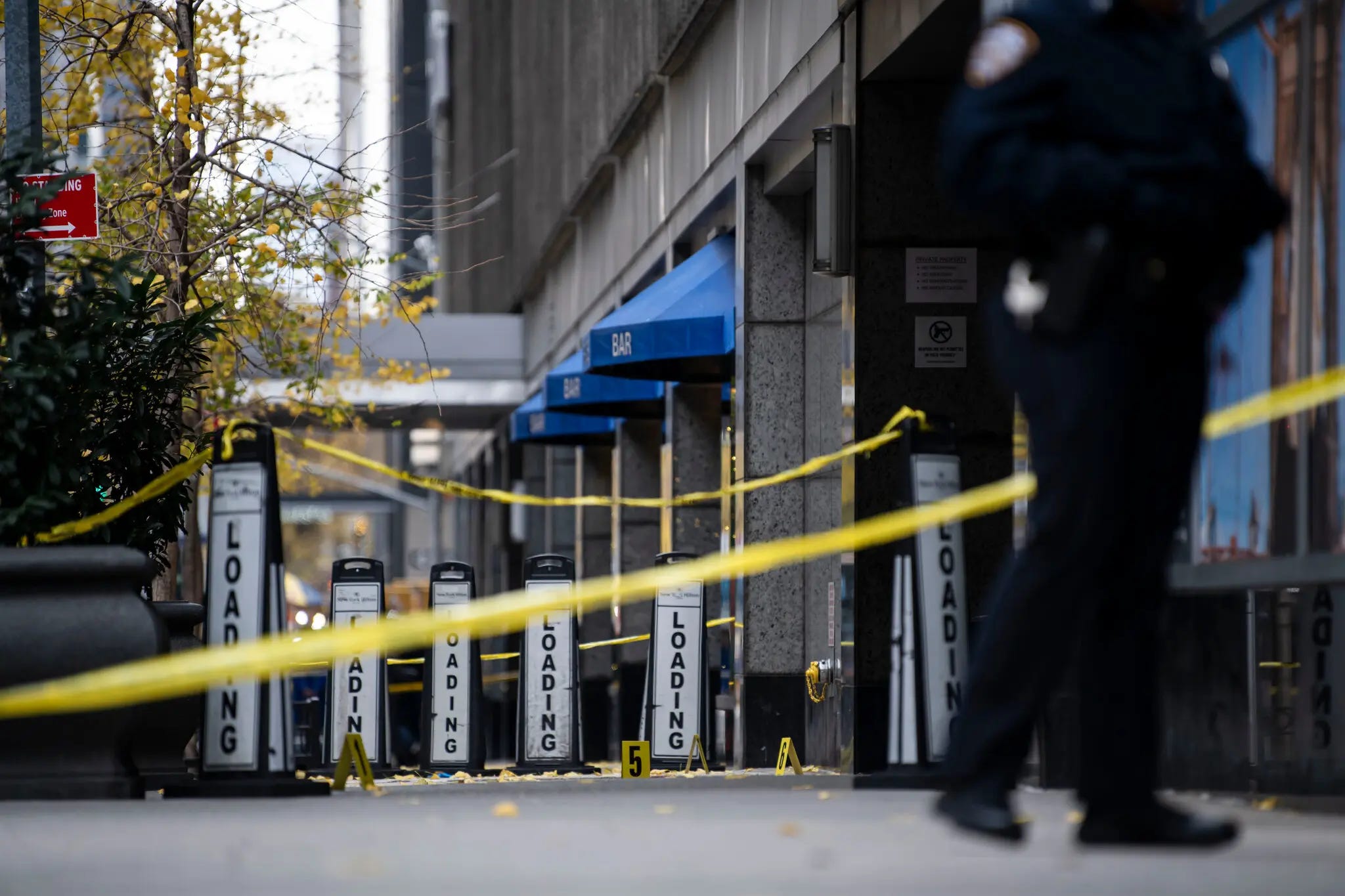
My mind this week, like so many others, has been consumed by following the saga of the CEO shooter in New York. There are so many takes out there, I’m not sure I really want to add more. Those who know me can guess where I stand.
I’ve been thinking a lot about the idea of violence and how we conceptualize it in our minds. The difference between fast violence and slow violence. About visibility.
I’ve been thinking about my neighbour. When we moved into our place a few years ago I got to know him well. I live in a hundred+ year old row house in Toronto where you practically live on top of your neighbours, so it’s in your best interest to get to know them.
This guy was salt of the earth. The house had been in his wife’s family for over a hundred years, and he took pride in working on it where he could. His backyard garden was exquisite and he was generous with his landscaping tips for me, who was just getting started.
He was generous with everything. If he was mowing his lawn, he was mowing our lawn. If he was shovelling the snow from his front, he was shovelling our front too. Cards for the kids on their birthdays and Christmas were always left at our door, with bills shoved in that felt too big to accept.
He was a simple guy, rough around the edges with a big heart. He had been a hockey player in his younger days, then a coach, and now drove a short haul truck for a living. Every morning he would be out of the house at 3am to get his day started. He would talk to me about looking forward to retirement, which was only a few years away.
He liked his work, but wanted to leave. Despite working for the same company for over a decade, they took advantage of him. They knew he was reliable and had a hard time saying no, and exploited that to pull unpaid work from him. He’d complain how they regularly gave him loads to drive around that were bigger than the capacity of the truck, requiring him to keep the back open, filling the cab with exhaust fumes. The smaller trucks were cheaper to run and better on gas, even when loaded down. He’d complain to them, but nothing changed. And he couldn’t afford to leave.
When the coughing started, you could tell it was bad. I could hear it from inside my house. The cancer diagnosis came quickly and moved through his body at a pace that shocked even the doctor. It was only six weeks between the diagnosis and his passing. The doctor said without a doubt it was caused by the exhaust fumes. Workers comp is still disputing it. No one will be charged with manslaughter.
We live in a system that can be violent and deadly, the only difference is what violence we choose to see. It’s easy to see the fast violence of individual actions. It’s harder to see the slow violence of our economic conditions - conditions nonetheless created by the individual actions of people with power.
None of this violence, fast or slow, is an acceptable or necessary condition of our existence.
Role Model of the Week
A weekly instalment where I highlight people I’m looking up to this week who are using the power they have to do cool, impactful, disruptive stuff to shift the status quo.
I’m not sure that he’s a role model so much as a thinker I’m seeing show up a lot this week. Friedrich Engels, a German philosopher from the 1800’s who was a political scientist and friend of Karl Marx, wrote a lot of economic and social theory about working conditions, inequality and the impact on ones life.
I remember studying him in school two decades ago and haven’t really thought about him much since.
This week he seems to be everywhere. His concept of “social murder” has been showing up in my feeds as people search for a way to articulate the needless deaths that occur in a system that often prioritizes profit over life. Here’s how he describes it:
“When one individual inflicts bodily injury upon another such that death results, we call the deed manslaughter; when the assailant knew in advance that the injury would be fatal, we call his deed murder. But when society places hundreds of proletarians in such a position that they inevitably meet a too early and an unnatural death, one which is quite as much a death by violence as that by the sword or bullet; when it deprives thousands of the necessaries of life, places them under conditions in which they cannot live – forces them, through the strong arm of the law, to remain in such conditions until that death ensues which is the inevitable consequence – knows that these thousands of victims must perish, and yet permits these conditions to remain, its deed is murder just as surely as the deed of the single individual; disguised, malicious murder, murder against which none can defend himself, which does not seem what it is, because no man sees the murderer, because the death of the victim seems a natural one, since the offence is more one of omission than of commission. But murder it remains.” - Friedrich Engels
The systems we’ve built modern society on aren’t working for so many people in the world right now. I wrote about this earlier in the year. We need to imagine new systems for our society, starting with one where murder - of every kind - is unacceptable.
Beautiful, thank you for sharing.